SCROLL DOWN ⬇️ FOR VIDEO
Volcanic Unrest Sparks Emergency Preparations
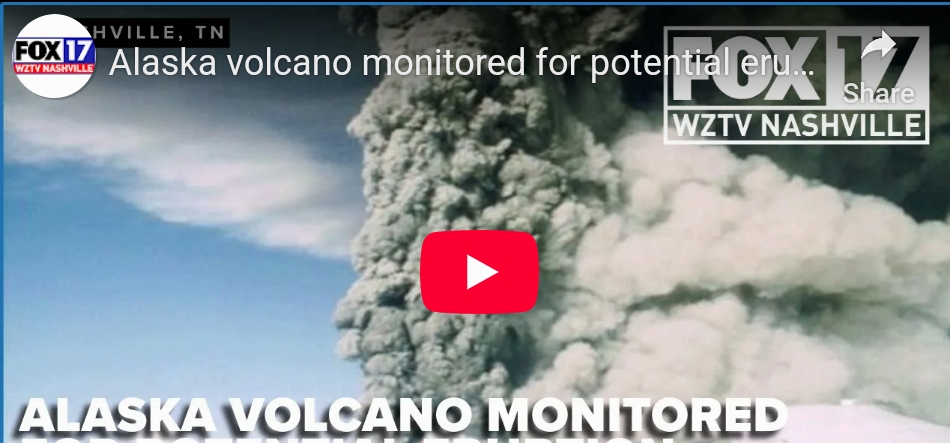
A volcano located 75 miles west of Anchorage, Alaska, is showing alarming signs of potential eruption, triggering urgent preparations across the region. Mount Spurr, part of the Aleutian volcanic chain, has experienced hundreds of earthquakes, ground deformation, and rising thermal activity since April 2024, leading the Alaska Volcano Observatory (AVO) to assign a 50% probability of eruption within the next six months.
The heightened alert comes as Anchorage—home to nearly 300,000 residents and a critical hub for global air travel—faces risks of ashfall, flight disruptions, and economic losses. Authorities stress that while no immediate eruption is detected, the combination of seismic unrest and historical precedent demands vigilance.
Key Details of the Volcanic Activity
Earthquake Surge
- Frequency: Over 2,700 small earthquakes recorded since April 2024, with weekly counts rising from 30 to 125 by February 2025.
- Depths: Quakes cluster in two zones—shallow tremors (0–10 km) near the volcano’s active vent and deeper events (12–35 km) linked to magma ascent.
- Magnitude: Most quakes register below magnitude 1.0, though a magnitude 2.9 event on January 2 marked the strongest in the sequence.
Ground Deformation
- Satellite Data: GNSS stations and radar interferometry show ~6 cm of ground inflation around the volcano, indicating magma accumulation 3–5 km underground.
- Patterns: The uplift mirrors pre-eruptive activity observed before the volcano’s 1953 and 1992 eruptions.
Thermal and Hydrological Shifts
- Crater Lake: A 120-meter-wide meltwater lake formed in the summit crater, with fumarole temperatures hitting 160°C (320°F).
- Steam Plumes: Persistent emissions visible via satellite, even during subzero winter conditions.
Eruption Probability
- AVO Assessment: 50% chance of eruption within months, though gas emissions (200–300 tonnes/day SO₂) remain stable, suggesting no imminent explosion.
- Alert Level: Elevated to Advisory (Yellow)—the second tier on the four-stage volcanic activity scale.
Broader Context: A History of Explosive Eruptions
Mount Spurr’s most recent eruptions in 1953 and 1992 provide critical context for current risks:
1953 Eruption
- Impact: Ash plumes reached 12 miles (20 km) high, depositing 3–6 mm of ash in Anchorage.
- Economic Toll: Minor flight cancellations and temporary road closures.
1992 Eruption
- Scale: A VEI-4 event, ejecting ash 65,000 feet into the atmosphere.
- Disruptions:
- Anchorage International Airport closed for 20 hours, stranding 10,000 passengers.
- Air quality alerts issued for 72 hours due to PM2.5 particulates.
- Over $160 million in economic losses (adjusted for inflation) from aviation and tourism impacts.
Current Parallels
- Magma Composition: Andesitic-dacitic magma (high viscosity, gas-rich) similar to past eruptions.
- Hazard Profile: Risks include pyroclastic flows, lahars (volcanic mudflows), and continental-scale ash dispersion.
Monitoring Challenges
Predicting volcanic behavior at Mount Spurr remains fraught with uncertainty due to:
Complex Plumbing System
- Dual Vents: The volcano has two active centers—Crater Peak (historically active) and the dormant summit.
- Magma Pathways: Difficulty distinguishing between intrusive magma (stalling underground) and eruptive ascent.
Data Limitations
- Remote Location: Harsh Arctic conditions hinder real-time monitoring. Only 11 seismic stations and 4 GPS units cover the area.
- Missing Precursors: Unlike the 1992 eruption, current activity lacks harmonic tremor—a key warning sign of rising magma.
Forecasting Gaps
- Probabilistic Models: AVO relies on historical analogs rather than deterministic predictions, creating public communication challenges.
[ Never miss a story — bookmark YAE to stay up-to-date on the best of what YAE has to offer, from viral news videos to scams exposed. ]
Community Impact
Anchorage’s Vulnerabilities
- Air Travel: Ted Stevens Anchorage International Airport handles 5 million passengers and 2.5 million tons of cargo annually. Ash clouds could ground flights for days, disrupting:
- Global Supply Chains: 80% of Asia-to-North America air cargo transits through Anchorage.
- Tourism: Summer cruise season brings 1.2 million visitors; ashfall could deter bookings.
- Health Risks: Fine ash (PM2.5) poses respiratory threats, especially to children, the elderly, and those with asthma.
Regional Threats
- Lahars: Melting snow/ice could send debris-laden floods down the Chakachatna River, threatening remote cabins and pipelines.
- Agriculture: Volcanic ash can contaminate water supplies and damage crops in the Matanuska-Susitna Valley.
Preparedness Measures
Government Protocols
- AVO Monitoring: 24/7 seismic networks, satellite thermal imaging, and biweekly gas-measurement flights.
- FAA Coordination: Real-time rerouting of flights if ash plumes develop. Anchorage Airport’s contingency plan includes:
- Runway closures and aircraft engine inspections.
- Sheltering protocols for stranded passengers.
Explore Our Homepage
Follow us on Bluesky
Public Readiness
- Emergency Kits: Residents advised to stock N95 masks, goggles, and HEPA air filters.
- Evacuation Routes: Maps distributed for communities near lahar-prone zones.
- Drills: Schools and businesses practice ashfall response, including indoor sheltering.
Economic Safeguards
- Fisheries: Contingency plans to protect salmon hatcheries from ash-contaminated water.
- Insurance: State-backed programs for businesses facing volcanic losses.
GO HERE FOR MORE
- [FOX 17 Nashville]: “Alaska’s Mount Spurr: Eruption Risks Explained”
https://fox17.com/news/local/alaska-volcano-monitored-for-possible-eruption-amid-volcanic-unrest
National perspective on volcanic hazards.
Discover more from Your Assignment Editor
Subscribe to get the latest posts sent to your email.

