•Visit: our YouTube Channel•
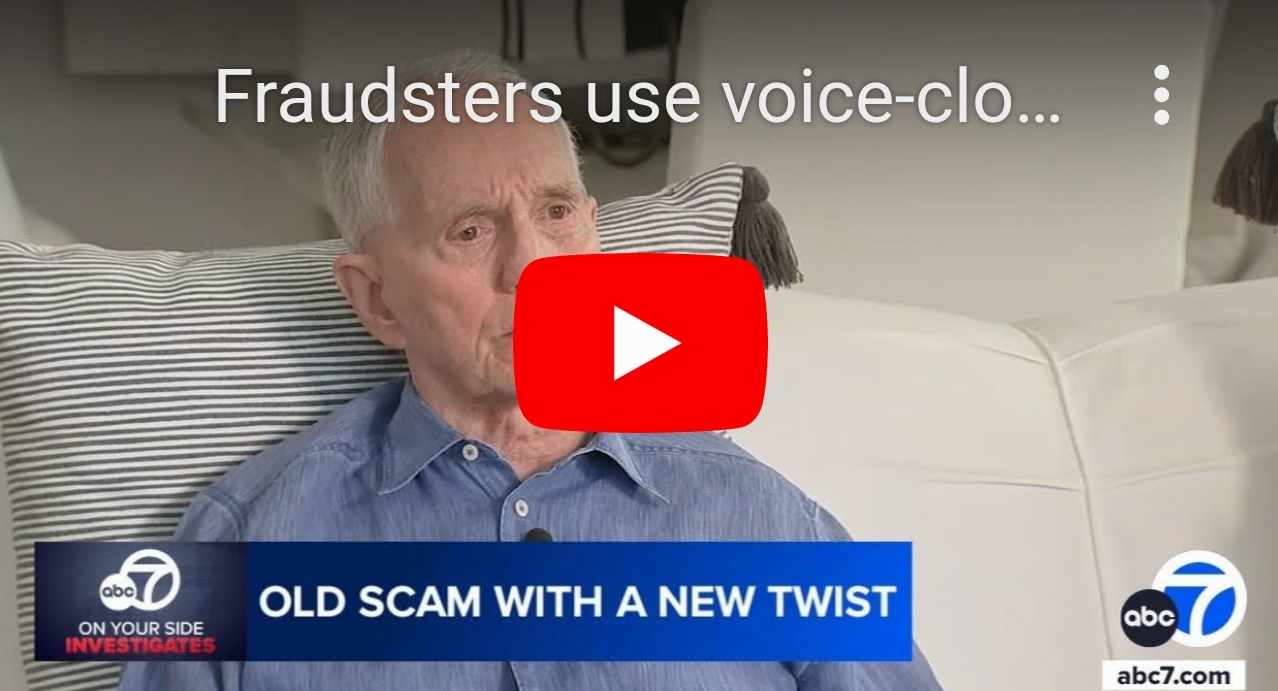
The Scoop: A man was swindled out of $25,000 after fraudsters used AI to replicate his son’s voice and tricked him into sending money. [ABC7]
A recent incident in Los Angeles has highlighted a disturbing new twist on an old scam, where fraudsters used artificial intelligence (AI) to clone a voice and swindle an elderly man out of $25,000.
This case demonstrates how scammers are leveraging advanced technology to make their schemes more convincing and dangerous.
The Scam
The victim, identified only as Anthony, received a call from someone he believed to be his son. The voice on the phone sounded exactly like his son, claiming to have been in a serious accident involving a pregnant woman. Shortly after, Anthony received another call from a person claiming to be a lawyer, demanding $9,200 for his son’s bail.
As the scam progressed, the fraudsters escalated the situation:
- They claimed the pregnant woman had died, raising the bail amount.
- They instructed Anthony to withdraw more money from the bank.
- They arranged for Uber drivers to collect the cash, totaling $25,000[3].
The AI Voice Cloning Technique
The scammers used AI-powered voice cloning technology to impersonate Anthony’s son. This technique requires only a short audio sample of the target’s voice to create a convincing replica. According to LAPD detective Chelsea Saeger, scammers often use the following methods to obtain voice samples:
- Initiating silent calls to capture the victim saying “hello” or similar phrases.
- Extracting audio from social media video posts.
Why This Scam Is Particularly Dangerous
This new twist on the traditional “family emergency” scam is especially concerning for several reasons:
- Convincing impersonation: The AI-generated voice sounds authentic, making it difficult for victims to doubt its legitimacy.
- Emotional manipulation: By impersonating a loved one in distress, scammers exploit the victim’s emotions and sense of urgency.
- Rapid execution: The scammers move quickly, leaving little time for the victim to verify the story or contact other family members.
How to Protect Yourself
To avoid falling victim to similar scams, consider the following precautions:
- Verify independently: Always attempt to contact the family member directly using a known phone number.
- Be wary of urgent demands: Legitimate organizations rarely demand immediate payment or threaten dire consequences.
- Question unusual payment methods: Be suspicious of requests for crypto transfers or cash pickups by third-party services.
- Limit personal information online: Be cautious about sharing voice recordings or personal details on social media.
As AI technology continues to advance, it’s crucial for individuals to remain vigilant and skeptical of unexpected calls demanding money, even if the voice sounds familiar. Public awareness and education about these evolving scam techniques are essential to protect vulnerable individuals from financial exploitation.
Voice Cloning Scam Prevention Q&A
- How can I protect myself from voice cloning scams?
- Verify the caller’s identity using a known phone number.
- Use a secret code word with family to confirm identities.
- Limit sharing personal information and voice recordings online.
- What are some common signs of a voice cloning scam?
- Unnatural speech patterns or robotic tones.
- Urgent requests for money or personal information.
- Requests for untraceable payment methods like gift cards.
- How effective are current methods in detecting voice cloning?
- Detection is challenging; vigilance and skepticism remain crucial.
- Some companies are developing digital watermarks for AI-generated content.
- What steps can businesses take to prevent voice cloning fraud?
- Implement voice verification systems with unique identifiers.
- Educate employees about recognizing and responding to suspicious calls.
- Are there any legal actions that can be taken against scammers using voice cloning?
- Legal actions are limited but evolving; proposed regulations include digital watermarking of AI content.
Discover more from Your Assignment Editor
Subscribe to get the latest posts sent to your email.

